


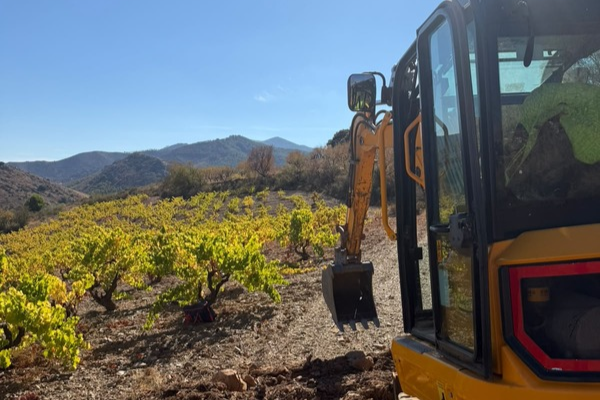
The harvest may be over, but work in the vineyards of Alpartir continues apace. Right now, we are repairing field borders, managing vegetation, and preparing the vines for winter. These are tasks that take a back seat during the harvest, but are essential for maintaining our mountain vineyards. On sloped terrain, maintaining tracks for access and repairing damage to the terraces allows us to work better and prevents any issues from worsening when the winter rains come.
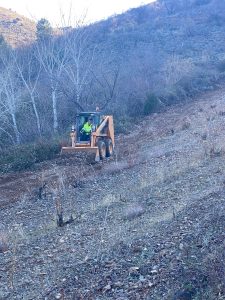
On some estates, we are also installing fencing because damage caused by roe deer and wild boars has become increasingly difficult to manage. We cultivate old bush vines, with vegetation close to the ground and within easy reach of wildlife. Roe deer eat the tender shoots that would have become grapes, in addition to destroying the shoots we need to shape and prune the vine the following year. Wild boars feed on the grapes and dig up the soil. We fence off plots where we need to protect the plants and safeguard yields; recovering and cultivating an old vine takes immense effort, and losing its shoots in just a few days jeopardises that work.
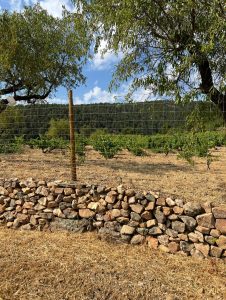
The Art of Dry Stone Walling
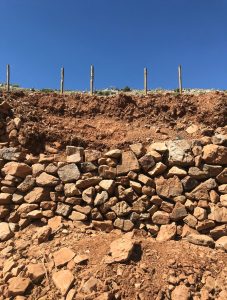
In El Jardín de las Iguales, we are rebuilding dry stone walls. These walls make farming the hillsides possible by supporting the terraced soil and preventing loss through erosion. We rebuild them using local stone, without mortar, interlocking the pieces to achieve a stable structure that allows water to drain through. This drainage is crucial: if water builds up behind the wall, the hydrostatic pressure increases and it could lead to collapse. Maintaining these terraces is an essential part of preserving the vineyard.
Biodynamics and Natural Cycles
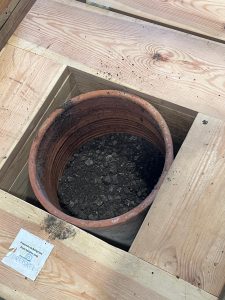
Autumn is also a time to work with biodynamic preparations, including Preparation 500 (horn manure), which we apply to the soil as part of our approach to agriculture. For us, this work is part of a broader commitment to care: preserving organic matter, encouraging soil biology, and reducing erosion. We pay close attention to the moisture and temperature conditions of each plot, because any intervention must make sense for the land and the timing of its application.
We are not pruning yet. After harvest, the leaves that remain active continue working, allowing the plant to build up reserves in its permanent structure, including the roots. These reserves will be vital when budburst occurs in spring. We allow the vine to complete this process and wait for winter dormancy to organise pruning, tailoring the timing to each plot and its exposure to the cold.
The Pulse of the Winery
Meanwhile, in the winery, we are pressing the final wines and moving them down to the underground caves to begin ageing. We decide when to press by tasting and monitoring the evolution of each tank, as every vineyard and every fermentation moves at its own pace. Afterwards, we select where each wine will age and continue observing its development. The underground cellars provide stable temperature conditions that allow us to guide the wines through this process with calm and precision.
The coming months are vital for the continuity of the project. We are finishing the crafting of one vintage while simultaneously setting the stage for the next. Repairing a wall, protecting a vine, or preserving the soil today will have a direct impact on our ability to continue farming these vineyards twenty or thirty years from now.